 News Feed
  Blog
Blog  Explore
  Events
  Forum
Forum  Jobs
Jobs  My Network


Caption Legal, Legal Video Services Nationwide
Legal videography sits at the intersection of two things that don't usually get combined: technical production skill and courtroom-grade procedure. Get the video wrong, and it's just a bad recording. Get the procedure wrong, and the footage may not hold up at all. Here's what actually matters in 2026.
What a legal videographer does
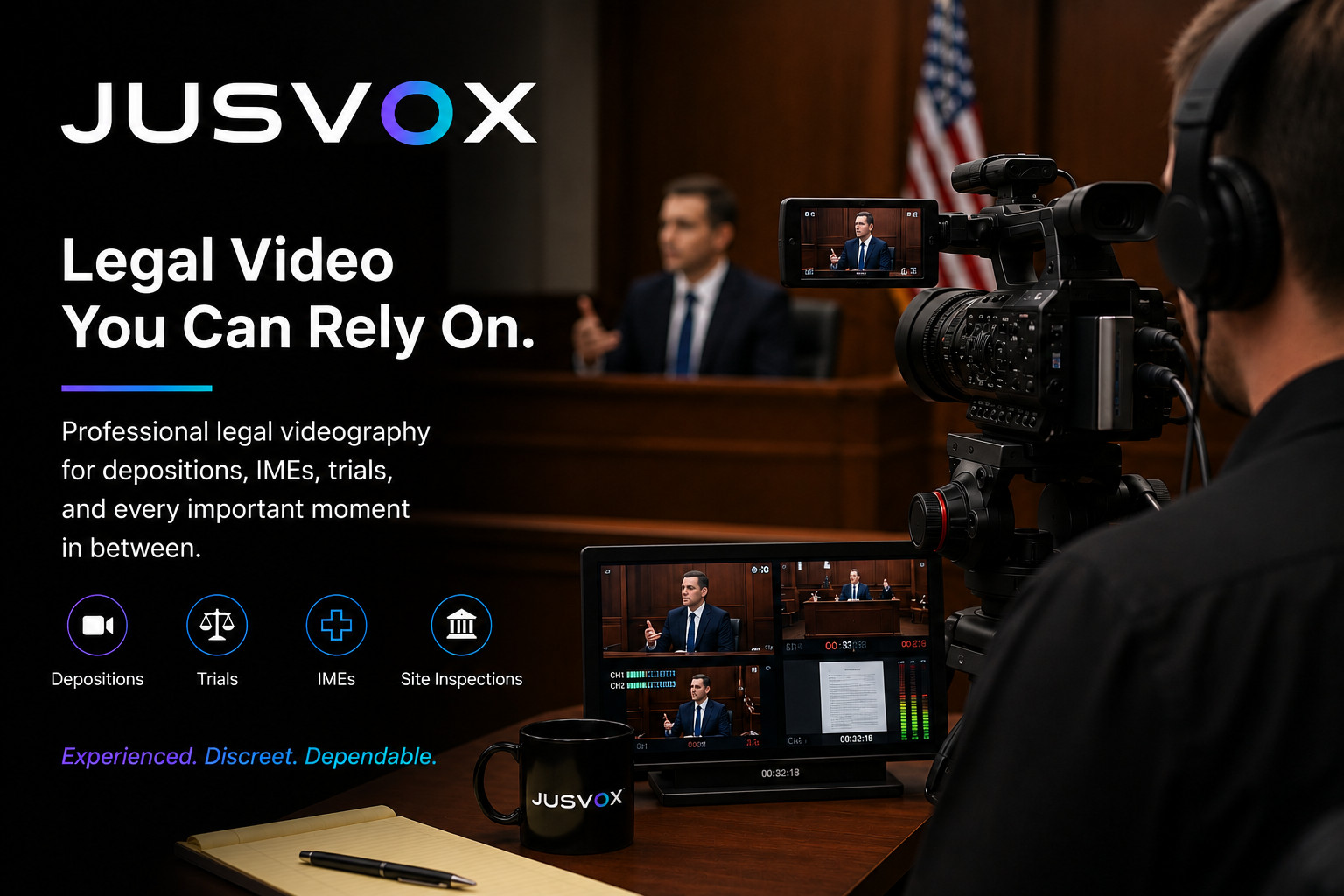
A legal videographer records depositions, trials, site inspections, day-in-the-life documentation, and other legal proceedings in a way that meets evidentiary standards. That means:
- Capturing usable, admissible footage, not just "good enough" footage
- Following strict procedural rules around how a recording starts, pauses, and ends
- Working seamlessly alongside court reporters, attorneys, and witnesses without disrupting the proceeding
- Producing a final product (synced video, exhibits, timestamps) that a court or opposing counsel can rely on
It's a service role built on precision, discretion, and technical consistency - not creative filmmaking.
Certification and credentials
This is the first thing attorneys check before hiring, and the first thing you should get before taking paid work.
- Certified Legal Video Specialist (CLVS) — the most recognized credential in the field, administered through NCRA
- State-specific notary or commissioning requirements (many states require the videographer to also be a notary or otherwise authorized to administer the oath if no court reporter is present)
- Ongoing continuing education to stay current on rule changes (especially around remote depositions and digital exhibits)
Certification signals to attorneys that you understand chain-of-custody, procedural compliance, and courtroom decorum - not just how to run a camera.
Knowing the rules, not just the equipment
This is where legal videography actually differs from every other kind of videography.
- Federal Rule of Civil Procedure 30(b) governs how depositions may be recorded - know it cold if you work in federal matters
- State-level equivalents vary, and a videographer working across states needs to know the differences
- On-record and off-record procedure must be exact: announcing the start/end of recording, handling breaks, and documenting any interruptions
- Confidentiality and chain-of-custody matter as much as camera settings - footage often needs to be handled with the same care as sealed evidence
Attorneys aren't hiring a camera operator. They're hiring someone who won't create a procedural problem that gets footage challenged or thrown out.
Equipment and technical standards
The technical bar has gone up significantly, and clients now expect broadcast-adjacent quality as the baseline.
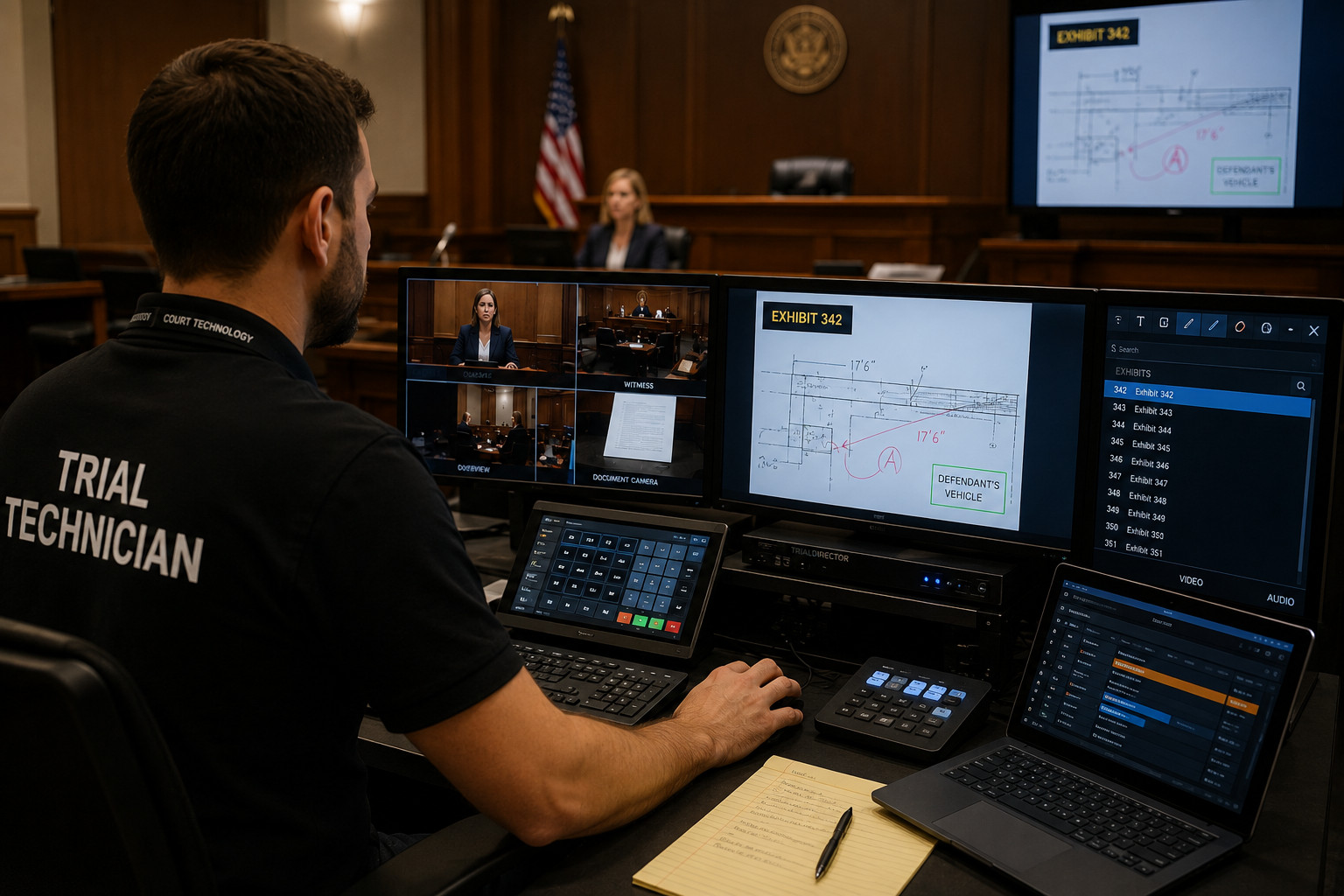
- Multi-camera setups for depositions and trials - capturing witness, exhibits, and room context simultaneously
- Redundant audio recording - a failed audio track can undermine an entire deposition
- Synchronized transcript-to-video output, so timestamped testimony lines up exactly with the footage
- Remote deposition capability - reliable streaming setups, screen-share exhibit integration, and backup connectivity are now standard expectations, not extras
- Long-form recording reliability - proceedings can run for hours, and equipment failure mid-testimony is not an acceptable outcome
Working with attorneys and litigation teams
The best legal videographers are judged as much on professionalism as on footage quality.
- Arrive early, test everything, and never make the room wait on setup
- Stay invisible during the proceeding - no distracting movement, no unnecessary interruptions
- Communicate clearly with attorneys beforehand about exhibit handling, remote participants, and any special requests
- Deliver final files in the format the firm actually needs (synced video, raw footage, exhibit stamps, cloud delivery) without back-and-forth
- Protect confidentiality by default - assume everything you record and store is sensitive
Attorneys remember the videographer who made a complicated deposition feel effortless. They also remember the one who caused a delay or a technical scramble.
Where the industry is headed in 2026
- Remote and hybrid depositions are now routine, not the exception, videographers need to be fluent in virtual platforms and exhibit-sharing tools
- AI-assisted transcription and synchronization are speeding up turnaround times, but human oversight is still required for accuracy and compliance
- Demand is outpacing supply: the broader court reporting and litigation support field is short-staffed nationally, which is creating strong opportunity for reliable, certified videographers
- Firms increasingly prefer working with a single national vendor network over juggling independent freelancers city by city, consistency and accountability matter more than ever
The bottom line
Being a professional legal videographer in 2026 means mastering three things at once: the technical craft of recording, the procedural discipline of legal proceedings, and the professionalism attorneys expect from anyone in their room during a case.
Get all three right, and it's a career with strong demand, flexible work, and a genuinely important role in how cases get built.