 Noticias
  Blog
Blog  Explorar
  Eventos
  Foro
Foro  Trabajos
  My Network
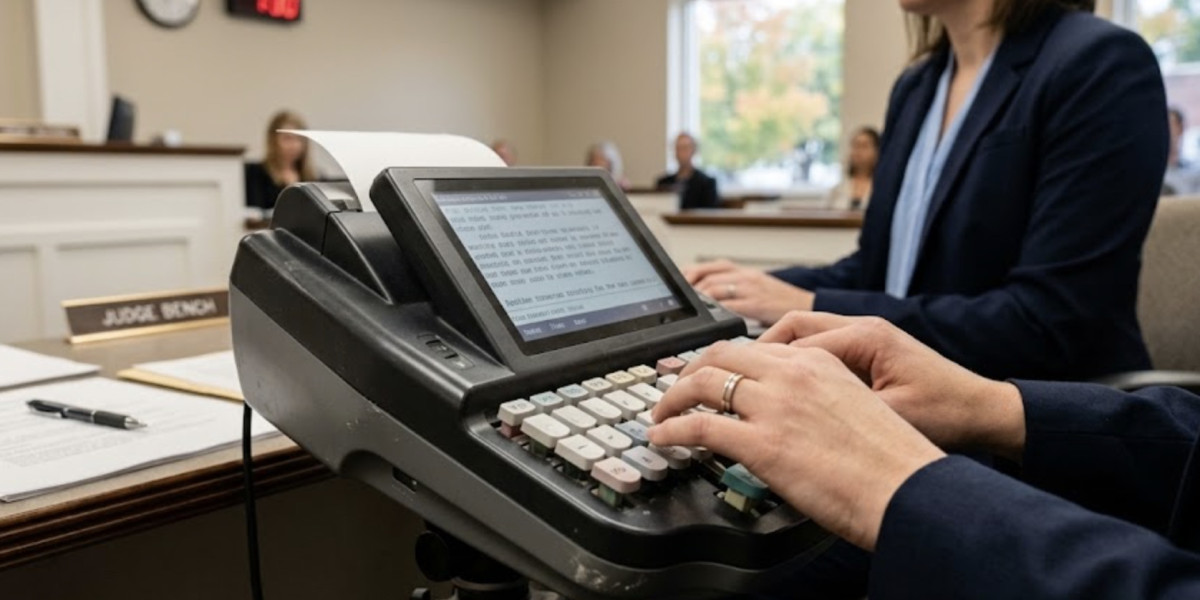

How to Become a Court Reporter in 2026: Every Type of Reporter, the Schooling, the Cost, and How to Get Your First Job
The Types of Reporters
"Court reporter" is an umbrella term. The main paths:
| Type | What they do | Tools |
|---|---|---|
| Stenographic reporter | Writes the verbatim record in shorthand on a steno machine, the traditional and most widely accepted method | Steno machine, CAT software, laptop |
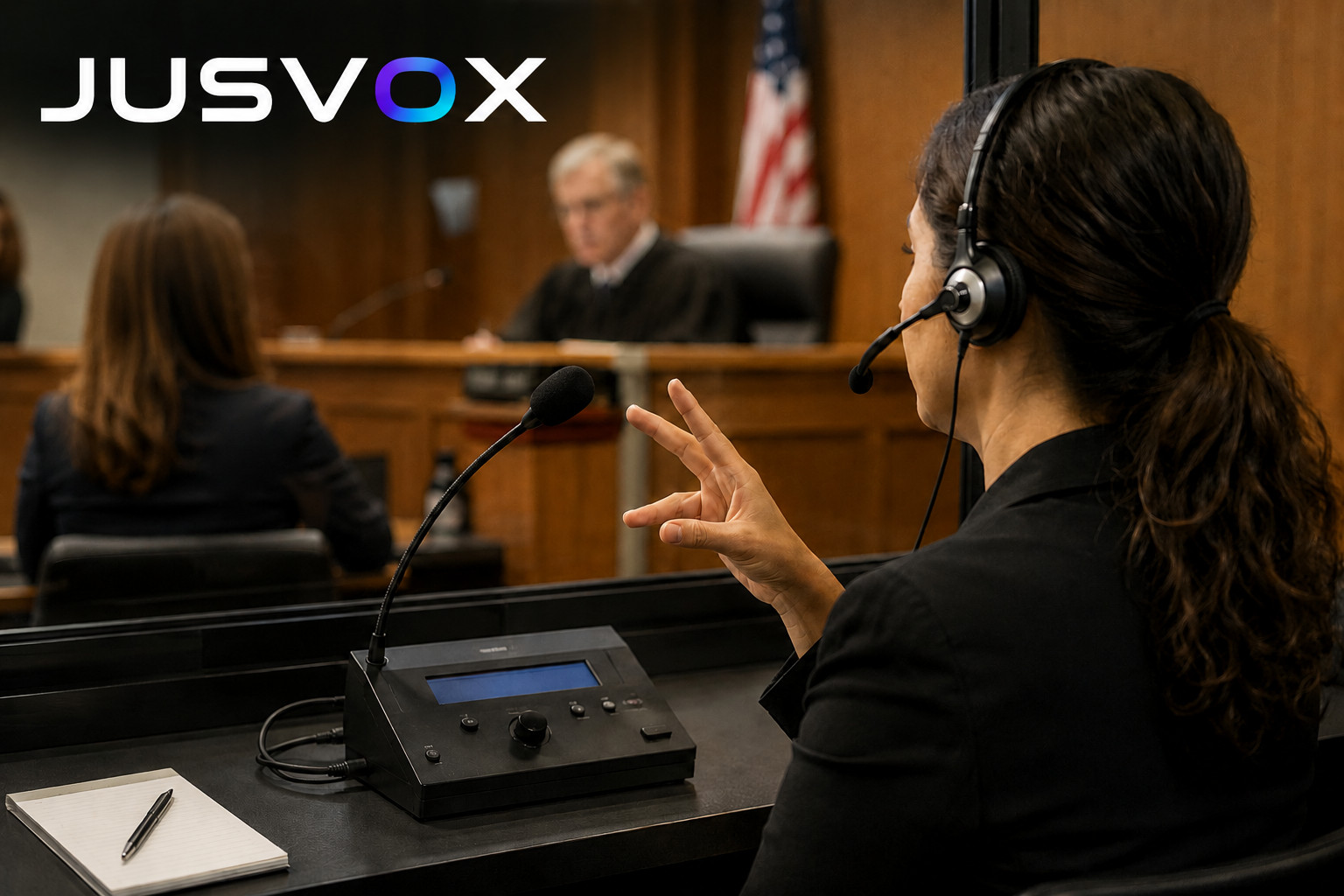
| Voice writer | Repeats every word into a silenced mask so participants can't hear, and holds the NVRA's Certified Verbatim Reporter credential | Stenomask, speech software |
| Digital reporter / electronic reporter | Captures the record by digitally recording trials, hearings, depositions, and other proceedings | Multi-channel audio recording equipment, logging software |
| Electronic transcriber | Turns digital recordings of legal proceedings into official transcripts | Transcription software, foot pedal |
| Realtime reporter | Delivers a live, instantly readable feed to attorneys and judges as the proceeding happens | Steno or voice setup with realtime-capable software |
| Broadcast captioner | Provides closed captions for television programs to help deaf or hard-of-hearing viewers | Steno or voice setup, captioning software |
| CART provider | Provides real-time translation in classes and public forums for deaf or hard-of-hearing participants | Steno or voice setup, remote captioning platforms |
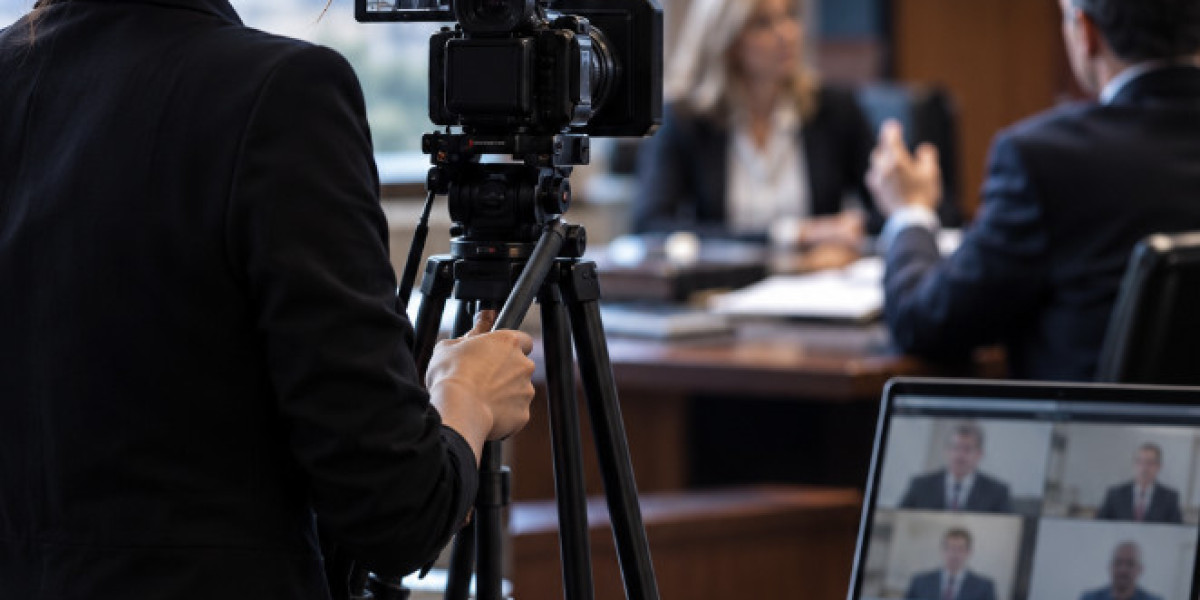
| Legal videographer | Records video depositions. NCRA offers a certification for legal videographers to show proficiency in video deposition practices | Cameras, lighting, audio, sync software |
Which methods are accepted depends on the state. NVRA lists dozens of states and D.C. where voice writers can work in state courts, plus federal and military courts. Nvra
The Path to Becoming a Steno Court Reporter
Step 1: Try it for free
NCRA's A to Z program is a free six-week course where experienced reporters teach you the steno alphabet and how to write on a machine. There is also a self-paced version with prerecorded videos, quizzes, and a discussion forum, and you get 45 days to finish it. You can borrow a machine from a local reporter or court reporting firm, or rent one for a fee. NCRA: NCRA A to Z® Online Program - Live (Fall 2026) +2
Step 2: Choose a school
Most students attend specialized certificate programs at business schools or associate or bachelor's programs at colleges, and online training is also available. Look for NCRA-approved programs: NCRA approval means a program meets the standards of NCRA's Council on Approved Student Education and agrees to periodic review.
Step 3: Build speed
Court reporting school is about skill, not credit hours. You start around 60 words per minute and climb through drills and dictations toward 200 wpm at 97.5% accuracy, California's standard. KW Court Reporting
How long it takes
Successful students typically finish in two to three years, though some take as little as two and others three or four. It's a speed-and-accuracy discipline, so your practice hours matter more than the calendar. Project Steno
What it costs (2026 ballpark)
| Route | Approximate cost |
|---|---|
| Traditional or private school | $15,000 to $30,000 in tuition, plus $3,000 to $6,000 for equipment and books. Some sources put the range higher, up to $55,000 |
| Community college | Often the cheapest route. One California program says students can finish in as few as two years for about $3,000, plus $300 to $700 for a used machine |
| Online, self-paced | One program lists $7,899 for training only, or $8,899 with a new machine. Another lists about $6,400 in total, and its program isn't eligible for federal financial aid |
| Certification exams | The RPR written test is listed at $181 for students, $220 for members, and $253 for nonmembers |
Prices change and vary widely, so verify current tuition before you enroll.
Equipment
- Steno machine. Stenograph lists a new Luminex CSE at $2,259 and a pre-owned one at $1,799, with rent-to-own at $98 a month for 28 months. Student models can run $300 to $1,600, and rentals average about $55 a month. StenographOklahoma State University
- A laptop capable of running CAT (computer-aided transcription) software. Stenograph credits up to $399 of your payments toward professional CATalyst software. Stenograph
- Voice writers need a stenomask and speech software. These can add about $1,500 to $2,000. Vocational Training
- Digital reporters need professional recording equipment and logging software, which is usually a much smaller upfront investment.
Certifications and Licensing
NCRA's Registered Professional Reporter (RPR) is the national baseline.
- The skills test has three five-minute dictations: literary at 180 wpm, jury charge at 200 wpm, and testimony at 225 wpm, each at 95% accuracy. Ncra
- There is also a written knowledge test with a scaled passing score of 70. Open-exam-prep
- To renew, you maintain NCRA membership and earn at least 3.0 CEUs every three years. Ncra
- Many states accept the RPR in place of their own certification or licensing exam. Wikipedia
Advanced credentials:
- Registered Merit Reporter (RMR), Certified Real-time Reporter (CRR), Certified Realtime Captioner (CRC), Certified Broadcast Captioner (CBC), and Certified CART Provider (CCP). Wikipedia
- You must already be an RPR before you can sit for the CRR. Ncra
State licenses:
- California's CSR exam requires two written exams and a 13-minute, four-speaker dictation at 97.5% accuracy, for both steno and voice-writing candidates. BASF
- Other states have their own systems, such as the CCR in New Jersey. Always confirm your state's rules before choosing a school.
Voice writers (NVRA):
- The CVR skills test uses the same 180/200/225 wpm structure at 95% accuracy. Nvra
- The fee is roughly $200 for NVRA members. Open-exam-prep
Digital reporters (AAERT):
- The CER and CET exams each cost $275. Transcriptioncertificationinstitute
- AAERT recommends, but doesn't require, a year of experience or a court reporting course. Aaert
- You need 30 hours of approved training per three-year period to keep the credential. Aaert
Where You Can Work
1. Official reporter. Official reporters are employed by federal, state, or county courts and create the record for trials, hearings, and court proceedings. This path offers a salary, benefits, and a steady schedule, though some courts hire only through civil service processes. Courtreporters
2. Freelance reporter. You're an independent contractor covering depositions, arbitrations, hearings, and other proceedings.
- Freelance deposition reporters are typically paid per page, with rates from roughly $3.50 to $8 or more depending on market and specialty. Courtreporters
- You set your own schedule, but your income depends on how much work you book.
3. Company / agency reporter. Many reporters work through or for court reporting agencies that handle scheduling, billing, and client relationships. This is a good way to get steady assignments while you build a client base.
4. Captioning and CART. Live TV captioning, classroom access for deaf and hard-of-hearing students, and events. Many reporters work as independent contractors and expand into captioning speeches, meetings, and live broadcasts. Paralegaledu
5. Adjacent roles: scopist, proofreader, transcriptionist, legal videographer, and remote deposition support.
What can you earn? The BLS median for court reporters was $67,310 in 2024, and BLS projects little or no employment change through 2034, with about 1,700 openings a year from replacement needs. Pay can range from about $35 an hour into six figures, and freelancers in major markets like New York, Los Angeles, Washington D.C., and Chicago can exceed typical ranges once established. Industry sources also describe a worsening reporter shortage, which puts pressure on rates. Learn How to Become a Court Reporter 2026: Salary & Certification +2
How to Get Work
- Intern before you graduate. Some programs build internships in. Ask any agency you'd like to work with whether they take student observers.
- Apply to agencies and national firms. Nearly every major market has agencies that hire newly certified reporters. Send your credential, your software, and your availability.
- Watch court job boards. Check your state's judicial branch website and federal court listings for official reporter openings.
- Say yes to small jobs. Early depositions and hearings build speed, reputation, and referrals.
- Get certified fast. Reporters who earn certification gain credentials that many states accept in place of state exams, and agencies prioritize credentialed reporters. Ncra
- Build relationships with attorneys and paralegals. Freelance work runs on repeat clients and referrals.
- Be reliable. Being on time, prepared, and responsive is what agencies remember.
Associations to Join
- NCRA (National Court Reporters Association). Offers scholarships and grants, a national network with member discounts, and continuing education. Ncra
- NVRA (National Verbatim Reporters Association). The home for voice writers.
- AAERT (American Association of Electronic Reporters and Transcribers). The home for digital reporters and transcribers.
- USCRA (United States Court Reporters Association). The association for federal official court reporters. My Career Tools
- Your state association. Local networking, state licensing updates, and mentors who know your market.
- DiscoverSteno.org. NCRA's site for learning about the career and finding approved programs. Ncra
Start Your Legal Career on JusVox
Learning the skill is the first challenge. Finding your people, your first jobs, and your first opportunities is the second. JusVox is the social network, directory, and job board built for legal professionals, and it's designed to get you started and keep you growing.
What you get on JusVox:
- Find mentors. Connect with working court reporters, legal videographers, and other professionals who've done what you're trying to do.
- Join a community. Court reporting school can feel isolating. JusVox puts you in a network of students, new graduates, and seasoned professionals.
- Find job postings. Browse openings from agencies, firms, and courts in one place.
- Attend events. Discover networking events, workshops, and industry gatherings.
- Publish your own articles. Share what you're learning, build your reputation, and get noticed before you have a single deposition on your résumé.
- Get discounts on schools and supplies. Save on programs, machines, software, and the gear you need to get started.
- Get discovered. A professional profile in the directory means agencies and attorneys can find you.
Whether you're taking a free A to Z class this fall or you're one dictation away from your RPR, your career grows faster when you're connected. Join JusVox at JusVox.com and start your legal career with a community behind you.
Build a profile that works while you sleep
Your JusVox profile is more than a résumé. It's your professional home base, and you decide what goes on it. Consider including:
- Your credentials and certifications (RPR, CVR, CER, state license, and others)
- Your reporting method and specialties, such as depositions, trials, realtime, captioning, or video
- Your location and the areas you cover
- Your equipment and technology
- Your services, availability, and experience
- A photo and a short bio that tells firms who you are and why they should book you
Get found. Get booked.
JusVox also works as a directory, so firms can search for the professionals they need by location and service. When a firm finds your profile, they can book you directly from it, with no middleman and no waiting for a referral. Every credential you add and every detail you complete makes you easier to find and easier to choose.
Whether you're taking your first steno class or you're a seasoned reporter looking for more work, your profile is your storefront. Create yours at JusVox.com and let the work find you.
Tuition, exam fees, and equipment prices change often, and licensing rules differ by state, so confirm current details with your state board and your school before you commit.