 News Feed
  Blog
Blog  Explore
  Events
  Forum
Forum  Jobs
Jobs  My Network


There is something about the last quarter of the year that makes people take a hard look at their lives. The holidays slow things down, the calendar is about to flip, and a quiet question starts to surface: Is this really what I want to be doing next year?
If that question sounds familiar, here is some good news. The legal industry is full of well-paid, flexible, meaningful careers that do not require law school, a seven-figure debt, or a decade of study. Some can be started in a matter of weeks. Others take a year or two of focused training. Many offer something people increasingly want: control over their schedule, the option to work for yourself, and work that actually matters.
Every lawsuit, closing, deposition, and trial depends on a crew of professionals most people never think about. Those are the people who record the testimony, witness the signature, film the deposition, organize the case, and deliver the papers. And across the country, those roles are in demand.
Here are five legal careers worth considering as you plan your 2027 fresh start.
Why a Legal Career, and Why Now?
- Real demand. Courts, law firms, title companies, and corporations need these professionals every single day. Several of these fields, especially court reporting, have faced well-publicized shortages as veteran professionals retire.
- Flexibility. Many of these careers can be freelance, part-time, remote, or mobile. You can build the schedule around your life instead of the other way around.
- Multiple entry points. You can start small, with a notary commission, and grow, or go all in on a longer training path.
- Work that matters. Whatever your role, you are part of how people get justice, close on their homes, and protect their families.
- No law degree needed. Every career on this list is open to people who never set foot in a law school.
Note: Requirements, fees, and rules vary by state, and they change. Always confirm current requirements with your state's licensing authority, court system, or the certifying organization before you enroll or invest.
Career #1: Court Reporter
What they do: Court reporters create the official, word-for-word record of legal proceedings, including trials, depositions, hearings, and arbitrations. That record becomes the transcript attorneys, judges, and appeals courts rely on. It is a skilled, respected profession, and one of the most talked-about shortage areas in the legal world.
There is also more than one way to become a court reporter. Here are the main types.
Type 1: Stenographic Court Reporter
This is the traditional and most widely recognized path. Stenographic reporters use a steno machine, a specialized keyboard that lets them write in shorthand by pressing multiple keys at once, forming phonetic "chords." Software then translates the shorthand into English text, often in real time.
- Where they work: Official court reporters work in courtrooms. Freelance (deposition) reporters work with law firms and reporting agencies. Some also move into captioning.
- Training: Typically a court reporting program, often two to four years depending on pace and prior experience. Many programs are approved by the National Court Reporters Association (NCRA), and most schooling focuses on theory, speed-building, English and legal vocabulary, and transcript production. Many programs are available online.
- Skills benchmark: Speed and accuracy are the heart of the training. The widely recognized Registered Professional Reporter (RPR) credential involves a written knowledge test and a skills test with testing speeds rising to the range of 225 words per minute.
- Credentials to know: RPR (Registered Professional Reporter), plus advanced NCRA credentials such as RMR and CRR, along with state certifications. Some states require a state license or certification (such as a CSR or CCR) to work as a reporter.
Type 2: Voice Writer (Voice Reporter)
Voice writers repeat the proceedings aloud, quietly and accurately, into a mask (a stenomask) that muffles their voice, while specialized speech recognition software converts it to text. They speak every word, including who is speaking, punctuation, and speaker identification.
- Where they work: Courts, depositions, and CART or captioning work, depending on state rules.
- Training: Often shorter than steno training, with many programs and mentorships taking roughly one to two years, though it varies widely by program and individual. Training emphasizes clean enunciation, speech recognition training, and real-time accuracy.
- Credentials: Certifications offered through voice writing organizations such as the National Verbatim Reporters Association (NVRA), plus state credentials where required.
- Good fit if: You have a strong, clear speaking voice and an excellent ear, and you like the idea of a path that may be quicker to enter than steno.
Type 3: Digital (Electronic) Court Reporter
Digital reporters use audio recording systems and take detailed notes to build a reliable log of the proceeding, which is then transcribed. They are responsible for monitoring audio quality, managing microphones, and making sure the recording is complete and clear.
- Where they work: Courtrooms, hearing rooms, and depositions, especially in jurisdictions that have adopted electronic recording.
- Training: Often the shortest path of the three. Programs and certification prep can be completed in months for many people.
- Credentials: The American Association of Electronic Reporters and Transcribers (AAERT) offers certifications such as Certified Electronic Reporter (CER) and Certified Electronic Transcriber (CET).
- Good fit if: You are technically minded, detail-oriented, and want a faster route into the profession.
Related Paths: Captioner and CART Provider
Many stenographic and voice writers also move into broadcast captioning (live captions for TV and events) and CART (Communication Access Realtime Translation), which provides real-time text for people who are deaf or hard of hearing. These roles use the same core skills and can be done remotely.
Court Reporter Quick Facts
- Pace of entry: Digital is often fastest, voice writing is often mid-range, and steno is typically the longest path.
- Work styles: Official (court employee), freelance (deposition), captioning, or a mix.
- Why people love it: High skill, high demand, and the option to freelance and work remotely in some settings.
Career #2: Notary Public
What they do: Notaries are state-commissioned officials who verify the identity of signers and witness the signing of important documents, deterring fraud. They notarize everything from powers of attorney and affidavits to real estate documents.
Why it is a great starting point: Becoming a notary is one of the fastest and most affordable ways to enter the legal world. Depending on your state, you may be able to get commissioned in a few weeks.
How to Become a Notary
- Check your state's requirements. Most states require you to be an adult, a legal resident of the state, and free of disqualifying criminal history. Some states require a training course, an exam, or both. Others do not.
- Complete any required training or exam.
- Apply with your state's commissioning office, usually the Secretary of State, and pay the application fee.
- Get a bond or insurance if required, and purchase your seal or stamp and a notary journal as required in your state.
- Take your oath and receive your commission.
Ways to Earn as a Notary
- Mobile notary: You travel to the signer, at homes, offices, hospitals, and more, and charge for your time and travel in addition to the state-set notarial fee.
- Loan signing agent (notary signing agent): A notary who specializes in handling mortgage and real estate loan packages. Title companies, escrow companies, lenders, and signing services hire loan signing agents, and it is one of the more lucrative notary specialties. Additional training and certification are strongly recommended, and often required by the companies that hire you.
- Remote online notary (RON): In states that allow it, notaries can notarize documents over secure audio-video technology. RON usually requires additional authorization, approved technology, and training.
- Specialty work: Hospitals, senior living, estate planning, and apostille support.
Time to start: Often days to a few weeks. Cost: Generally modest compared to other careers, and varies by state. Good fit if: You want a low-barrier start, flexible hours, and a side income that can grow into a full business.
Career #3: Legal Videographer
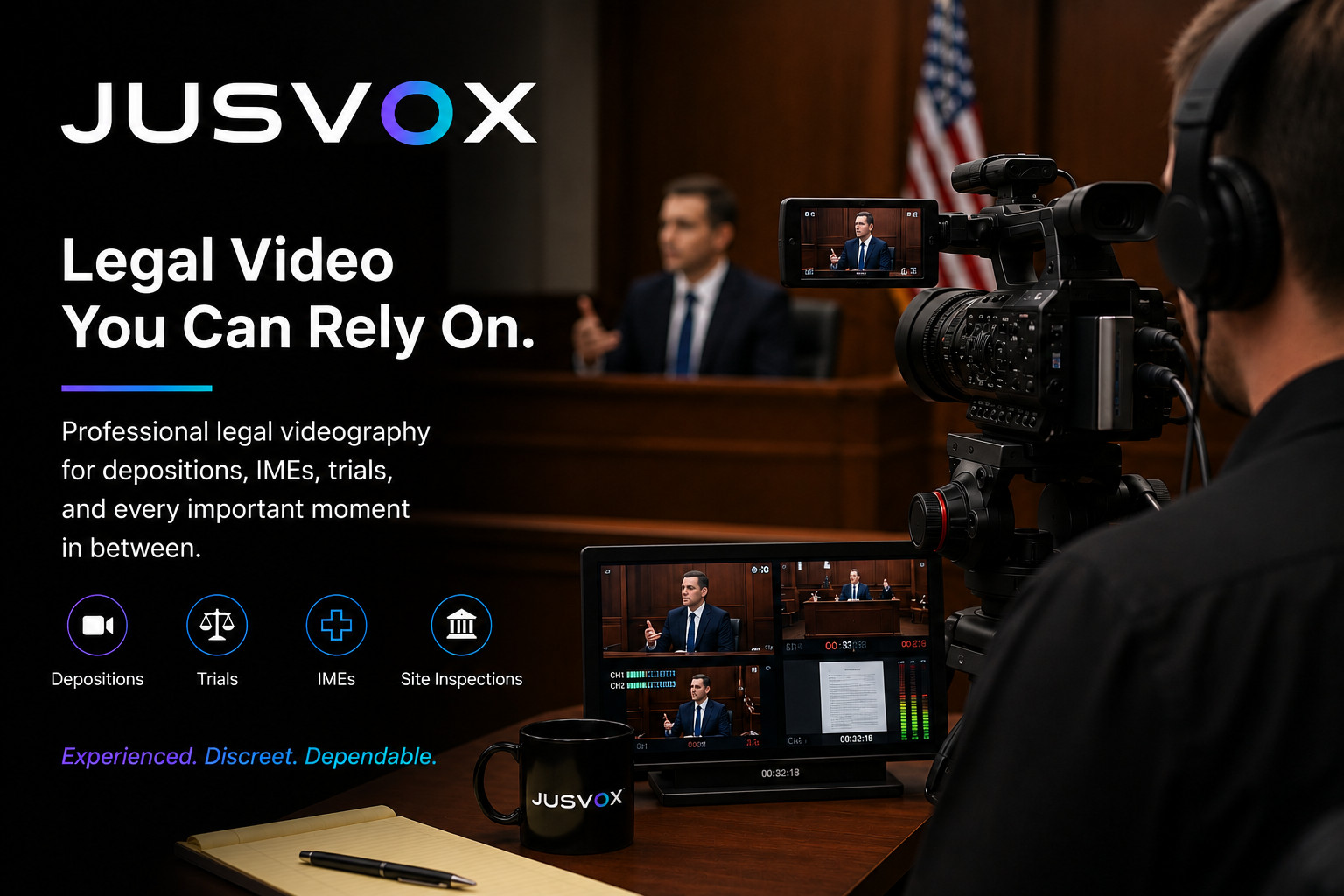
What they do: Legal videographers record video depositions and other legal proceedings, capturing witness testimony with precision. Video lets a judge or jury see demeanor, tone, and body language, which a transcript alone cannot show. A video of a deposition can be played at trial, so the work has to be right.
What it involves:
- Setting up cameras, lighting, and audio in a conference room or on location
- Following legal video protocols, including swearing in, introductions, and accurate on-the-record timing
- Managing exhibits and recording changes
- Delivering a clean, usable final video, sometimes synchronized to the transcript, which often involves editing and syncing
Training: There is typically no single license required to work as a legal videographer, which makes this field accessible to people with video, photography, or audio backgrounds. Training focuses on legal protocols, deposition procedures, audio quality, and professional conduct. Credentials such as the Certified Legal Video Specialist (CLVS) offered through the National Court Reporters Association are available, and structured legal videography training programs are emerging. Check the rules in your state, because some have specific requirements for who may record legal proceedings.
How people earn: Most legal videographers work as independent contractors, taking assignments from court reporting agencies, law firms, and legal video companies, which makes the work flexible and travel friendly. Some also build full production businesses, including editing, syncing, and trial presentation support.
Good fit if: You like technology, you have a steady hand and a good eye, and you are comfortable in professional settings where precision matters.

Career #4: Paralegal
What they do: Paralegals support attorneys by researching the law, drafting documents, managing case files, organizing evidence, preparing for trial, and communicating with clients. They cannot give legal advice or represent clients in court, but they do a huge share of the work behind every case. In many firms, great paralegals are the backbone of the office.
Education Paths
- Certificate programs: Often a few months to a year, and a popular option for people who already have a degree in another field and want to pivot quickly.
- Associate degree in paralegal studies: Typically about two years.
- Bachelor's degree: Roughly four years, and often preferred by larger firms and for advanced roles.
- Master's or post-baccalaureate programs: For career changers and those seeking leadership positions.
- ABA-approved programs: The American Bar Association approves paralegal programs that meet its standards. It is not mandatory everywhere, but many employers value it.
Certifications
Certification is voluntary in most states but can help you stand out. Well-known options include the Certified Paralegal (CP) credential from NALA and the PACE/RP credentials from the National Federation of Paralegal Associations (NFPA). Some states and local associations offer their own programs, too.
Practice Areas
Paralegals specialize in areas such as litigation, real estate, family law, immigration, estate planning, corporate law, intellectual property, personal injury, and criminal law. Some paralegals work for law firms, corporations, nonprofits, courts, or government agencies, and many roles now offer hybrid or remote work.
Good fit if: You are organized, a strong writer, love research and problem solving, and want a clear career ladder that can lead to senior paralegal, case manager, or legal operations roles.
Career #5: Process Server
What they do: Process servers deliver legal documents, such as summonses, subpoenas, and complaints, to the people named in a case. Proper service is a legal requirement, because a case generally cannot move forward unless the parties have been properly notified. It is a job where reliability and good judgment matter.
What it involves:
- Locating individuals and delivering documents according to your state's rules
- Keeping detailed records and completing sworn proof of service
- Staying calm, professional, and safe in unpredictable situations
- Often working with attorneys, law firms, and service companies
Requirements: These vary a lot by state and even county. Some states require registration, certification, or licensing, and background checks, while others have minimal formal requirements beyond age and not being a party to the case. Many people begin with short training courses or by working under an established process serving company. Industry organizations, including the National Association of Professional Process Servers (NAPPS), offer education and certification.
How people earn: Most process servers work as independent contractors, or run their own small businesses, and are paid per service. Jobs can include rush and hard-to-find situations, which often pay more.
Good fit if: You are self-motivated, comfortable on the move, great at problem solving, and like work that is different every day.
Quick Comparison: Which Path Fits You?
Career | Typical time to start | Schooling | License or certification | Work style |
|---|---|---|---|---|
Notary | Days to weeks | Minimal; training in some states | State commission | Mobile, flexible, can be a side business |
Process server | Weeks to a few months | Short courses | Varies by state; some require registration | Independent, on the go |
Legal videographer | Weeks to months | Training plus equipment | Usually no single license; certifications available | Freelance, travel, production |
Digital court reporter | Months | Short program and certification | Certification common | Courtroom, depositions |
Voice writer | Roughly 1-2 years | Program or mentorship | Certification and state rules vary | Court, depo, captioning |
Paralegal | 6 months to 4 years | Certificate to degree | Voluntary certification | Law firm, corporate, hybrid |
Stenographic reporter | Typically 2-4 years | Court reporting program | RPR plus state requirements | Court, depo, captioning, remote |
How to Combine Careers (the Secret Many Pros Use)
Many of the most successful people in the legal support world do more than one thing. Examples:
- A notary who becomes a loan signing agent and adds remote online notarization
- A process server who also notarizes and offers document retrieval
- A legal videographer who partners with court reporters to deliver full deposition packages
- A paralegal who also becomes a notary for faster document handling
- A court reporter who adds captioning or CART
Starting with a quick, low-cost credential like a notary commission lets you earn while you pursue a longer one.
Your First 90 Days: A Simple Plan
Days 1-14: Explore. Talk to people who do the work. Read your state's requirements for each role. Decide which two or three careers interest you most.
Days 15-45: Choose and enroll. Pick a first path. If you want income quickly, start with a notary commission, process serving, or videography. If you are ready for a longer program, enroll in a paralegal or court reporting program.
Days 46-90: Build your presence. Create a professional profile, get your supplies, and start networking. Reach out to local attorneys, title companies, reporting agencies, and other pros. Ask for informational conversations, and say yes to your first assignments, even small ones.
Where to Get Found, Find Work, and Find Your People
Starting a legal career can feel lonely at first. Where do you find your first assignment? Who do you ask your questions? How do clients find you?
That is exactly why JusVox exists. JusVox is a home for legal professionals, with a nationwide directory, a social network, and a job board. Whether you are a brand-new notary, a student reporter, a videographer, a process server, or a paralegal, you can:
- Create a profile with your photo and details so clients can find you
- Get found by city and state and booked directly from your profile
- Find work through job postings and coverage assignments
- Network and learn from experienced professionals and mentors
- Join free, and be part of a community built for the people behind the case
The sooner you create your profile, the sooner the right people can find you.
Frequently Asked Questions
Do I need a law degree to work in the legal field? No. Every career in this article is open to people without a law degree.
What is the fastest legal career to start? Becoming a notary is typically the fastest, often taking days to weeks depending on your state. Process serving and legal videography can also be started relatively quickly.
Which type of court reporter is right for me? Stenographic reporting is the traditional path and typically takes the longest. Voice writing and digital reporting can be faster routes. The right choice depends on your strengths, your timeline, and what your state allows.
Can I do these jobs part-time or remotely? Many can be done part-time or as a side business, especially notary work, process serving, and videography. Paralegal and captioning roles frequently offer remote or hybrid options.
Can I start one career and add another later? Yes. Many professionals begin with a quick credential and add more skills over time.
Are requirements the same in every state? No. Licensing, training, and fees vary by state, so always verify with your state agency or certifying organization.
The Bottom Line
A new year does not have to mean the same old routine. The legal industry is full of people who started exactly where you are: curious, a little nervous, and ready for something better. They picked a path, took the first step, and built careers they are proud of.
Your first step might be a notary application. It might be a call to a court reporting school, a paralegal program, or a videographer who is willing to talk shop. Whatever you choose, you do not have to wait for January 1st to begin.
Start now. Be ready to hit the ground running in 2027.
Create your free profile on JusVox.com, find your people, and get found.